Photography Safari Tanzania: Tips to Capture the Big Five
Tanzania offers some of the most spectacular wildlife photography conditions on Earth. Here's how to come home with shots you'll be proud of.
Tanzania: A Photographer's Paradise
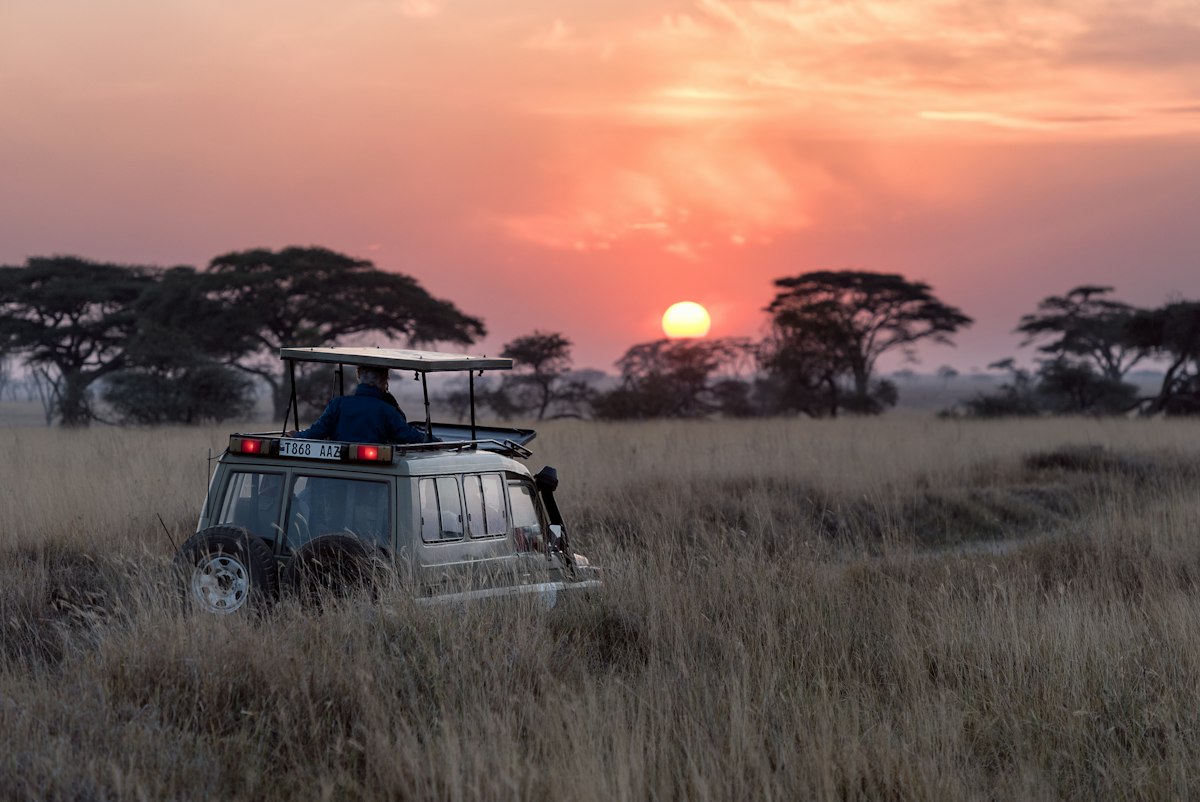
The Serengeti, Ngorongoro, and Tarangire offer some of the finest wildlife photography opportunities anywhere on Earth. Open landscapes, abundant wildlife, and extraordinary light — especially at dawn and dusk — create conditions that professional photographers travel the world for. With the right gear, technique, and positioning, you'll capture images that look impossible.
The Golden Hours
The most important lesson of wildlife photography in Africa is simple: be out at dawn and dusk. Always. The golden hour light transforms ordinary wildlife moments into extraordinary images. Middle-of-the-day light (10am–4pm) is flat, harsh, and unflattering for both animals and landscapes. The animals are also less active mid-day.
In Tanzania, golden hour starts approximately 45 minutes after sunrise and lasts 60–90 minutes. In the evening, the hour before sunset provides the richest reds and oranges. Organise your game drives around these windows.
Camera Gear for Tanzania Safari
Essential (Bring This Minimum)
- Camera body: Full-frame or crop-sensor DSLR or mirrorless with good high-ISO performance (Sony A7 IV, Nikon Z6 III, Canon R6 Mark II, or equivalent). Wildlife moves in dim light — ISO 3200+ performance matters.
- Telephoto lens: 100–500mm or 150–600mm — This is your workhorse. Sigma 150–600mm Contemporary or Tamron 150–600mm G2 are excellent value. Native telephotos from Sony, Canon, or Nikon are better but significantly more expensive.
- Memory cards: Minimum 256GB total. Animals don't wait for you to change cards. Fast cards (V60 or V90) matter for burst shooting.
- Extra batteries: Cold mornings and continuous autofocus drain batteries. Bring 3+ and keep one warm in a pocket on cold days.
- Beanbag or window mount: Essential for stabilising a heavy telephoto on a safari vehicle window. Far better than a tripod in a vehicle.
Recommended Additions
- Wide-angle lens (16–35mm): For dramatic landscapes, skies with wildlife in context, and campfire scenes
- 70–200mm f/2.8: In a second body — fast, versatile for closer subjects, better in very low light than a 600mm
- ND filters: For creative motion blur shots — waterfalls, birds in flight at slow shutter
- Laptop and portable hard drive: Back up your cards every night without exception. You cannot reshoot Tanzania.
- Dust blower: Dust is everywhere. Your sensor will accumulate dust. Clean it daily.
Key Camera Settings for Wildlife
- Mode: Aperture Priority (Av/A) in even light; Manual in predictable light conditions
- Shutter speed: Minimum 1/800s for moving animals. 1/1600s+ for birds in flight
- Aperture: f/5.6–f/8 for most wildlife shots. Open up (f/4) for low light; stop down (f/8–f/11) for groups
- ISO: Set auto-ISO with a maximum of 12800. Modern cameras handle this beautifully; don't sacrifice shutter speed for a clean ISO
- Drive mode: High-speed burst (10+ fps). You can edit down; you can't add frames you didn't capture
- Autofocus: Subject tracking / eye AF is transformative for wildlife. Use it.
- White balance: Auto, then correct in post — or set Kelvin to approximately 5500K in golden hour, 6500K–7000K in shade
Best Shots to Look For
- Eye contact: Any wildlife image becomes immediately more powerful when the animal looks at the lens. Wait for it.
- Action: Predator hunts and kills, birds landing, animals fighting, cubs playing. Position at waterholes in dry season and wait.
- Context shots: Wide angles showing animals small in a vast landscape. Empty space tells the story of Africa's scale.
- Silhouettes: Backlit animals against golden or orange sky. Set exposure on the bright background; the animal goes to black. Powerful and graphic.
- Behaviour shots: Lions grooming, elephants drinking, wildebeest calves feeding. These tell stories that pure action shots don't.
- Dawn at Ngorongoro: Mist rising from the crater floor with animals emerging from it. Get to the crater descent road at first light.
Photo-Specific Safari Tips
- Request a private vehicle (not a group tour) — you need to position the vehicle and control timing, impossible in a shared vehicle
- Ask your guide to kill the engine when stationary. Vibration from an idling vehicle ruins sharpness at 400mm+
- Bring a dust bag or cover for your longest lens — the dust and dirt of game drives permeates everything
- Request a vehicle with a roof hatch, not just sliding windows — it gives much better shooting angles
- Get low when possible. Eye-level with the animal produces dramatically better images than shooting down
- Be patient. The most memorable shots come from sitting with a pride of lions for 3 hours, not from driving past 12 different sightings
Best Photography Camps
- Singita Mara River Tented Camp — Positioned on the Mara for crossing season. Outstanding predator territory. Photography guides available.
- Namiri Plains (Asilia) — The cheetah capital of the Serengeti. Built specifically in a conservation-closed area now reopened — extraordinary density of big cats.
- Ndutu Safari Lodge — Perfect base for calving season photography. Resident wildlife researchers often share knowledge with guests.
- Tarangire Safari Lodge — Platform rooms overlook a waterhole with constant elephant activity. Unbeatable for elephant portraits.
Ready to photograph Tanzania's incredible wildlife? Plan your photography safari with our AI trip planner.
Ready to Plan Your Tanzania Trip?
Let our AI build a personalised day-by-day itinerary for you — in under 60 seconds.
Generate My Itinerary →